Celebrating research excellence at Harris Manchester College
The following article by the College's former Chaplain, the Rev'd Dr Claire MacDonald, is reproduced with kind permission of The Inquirer magazine, where it first appeared in August 2026.
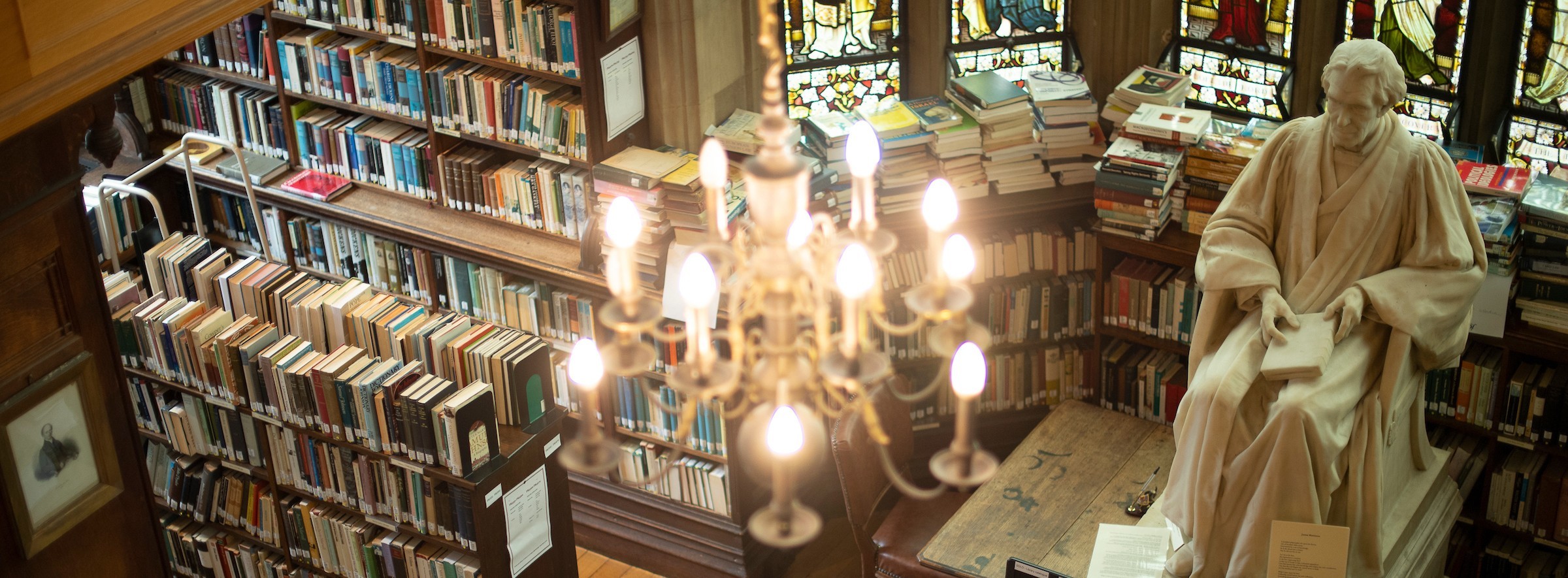
Three things make Oxford's Harris Manchester College unique: its Unitarian heritage, the fact that all students are over 21, and perhaps most significantly for Unitarians, its world-class collection of Unitarian and dissenting books, papers, pictures, maps, notebooks, and objects. Over the past four years, the college has developed a centre for dissenting and Unitarian studies through residencies, talks, projects, and book launches, welcoming creative researchers and providing access to Oxford's libraries and Harris Manchester's remarkable holdings.
Widening access is a core part of our vision, so we were thrilled when feminist historian Rev. Dr. Ann Peart generously proposed and funded summer scholarships for women researchers, LGBTQ+ researchers, and people of colour. This summer, we welcomed the first two Peart scholars: north-east Indian lens-based visual artist and researcher Juban Lamar, and Brazilian writer-researcher Carolina Maciel. Both are Unitarians, but had never been to Oxford. Through Ann's generosity, we offered each a funded two-week residency, and three months of on-line access. With the Manchester Academy Trust's support, we also offered one-week places at our Summer Research Institute to Ben Stables and Ryan 0. Carr.
Ben says: "I spent a wonderful week in Oxford, delving into the Harris Manchester College archives to trace the Yorkshire Unitarian story. Back issues of The Inquirer brought the life of Annie Rollinson into focus. A working-class woman, Annie did the work of a minister at Elland in the 1870s but was never officially recognised. Later, she combined family life with work amongst and advocacy for London's poor. Her full story has never yet been told. I've made fantastic connections, far beyond what can be put into words, and will keep researching!"
Carolina says: "In my two weeks in Oxford, the discoveries and learning experience surpassed my expectations. I learnt about the reception of Rev. William Ellery Channing's theological work in Britain through several sermons and eulogies, mainly one written by Rev. Robert Aspland in 1842. It was particularly amusing to learn how congregants would make sure the sermon was published as a record of their history. This is helping me develop more nuance in my reading of transatlantic ties between American and British Unitarians in the mid-1800s.
Another priceless experience was handling an appeal by Rev. Robert Wedderburn to Lord Brougham and Vaux on the emancipation of enslaved people, since the tone was 9uite different from anything I'd ever read from him, and it was a physical document (stored at Weston Library). I'm grateful for these tangible opportunities in my field of scholarship, which was once 9uite a digital-only, solitary guest. I look forward to telling the stories of so many intricate, complex characters in the history of Unitarianism."
Juban says: "My two weeks at Harris Manchester College have been among the most enriching experiences of my research journey. I am deeply grateful to Ann Peart for her generosity and for her vision in recognising the importance of archival research in Unitarian studies, particularly work that recovers women's contributions to the movement, [which] made this opportunity possible. And the time spent with participants of the Summer Research Institute and the staff at HMC made the experience all the more meaningful."
Ryan says: "I was finishing up research on a forthcoming edition of the writings of Samson Occom, a Native American minister who belonged to the dissenting tradition, broadly speaking. I was also looking into how Frederick Douglass's trip to Great Britain in 1845 was reported on in the Unitarian press. It was a wonderful trip. I don't often have the opportunity to spend so much time with like-minded scholars. I learned a lot and was very impressed by the College and its staff. I hope to come back soon."
For myself, fellow-librarian Kate Alderson-Smith, and librarian Dr Sophie Gibson, it's been a pleasure to see new possibilities blossom - the sort that only happen when researchers come face to face (or hand to hand) with original materials, and bring their own creative scholarly thinking to their study. We're deeply thankful to Rev Dr. Ann Peart for helping us bring people to the college, and build community.